कृष्ण
Krishna
Devotional Texts & Prayers
Krishna (Kṛṣṇa) — the eighth avatar of Vishnu, the speaker of the Bhagavad Gita, the cowherd of Vrindavan, the charioteer of Arjuna — is the most beloved figure in all of Vaishnavism and among the most widely worshipped deities in Hinduism globally. His birth on the eighth lunar night (Ashtami) of the Krishna Paksha in the Shravana month is celebrated as Janmashtami — the most widely observed festival after Diwali and Navratri.
Krishna Devotional Texts
About Krishna
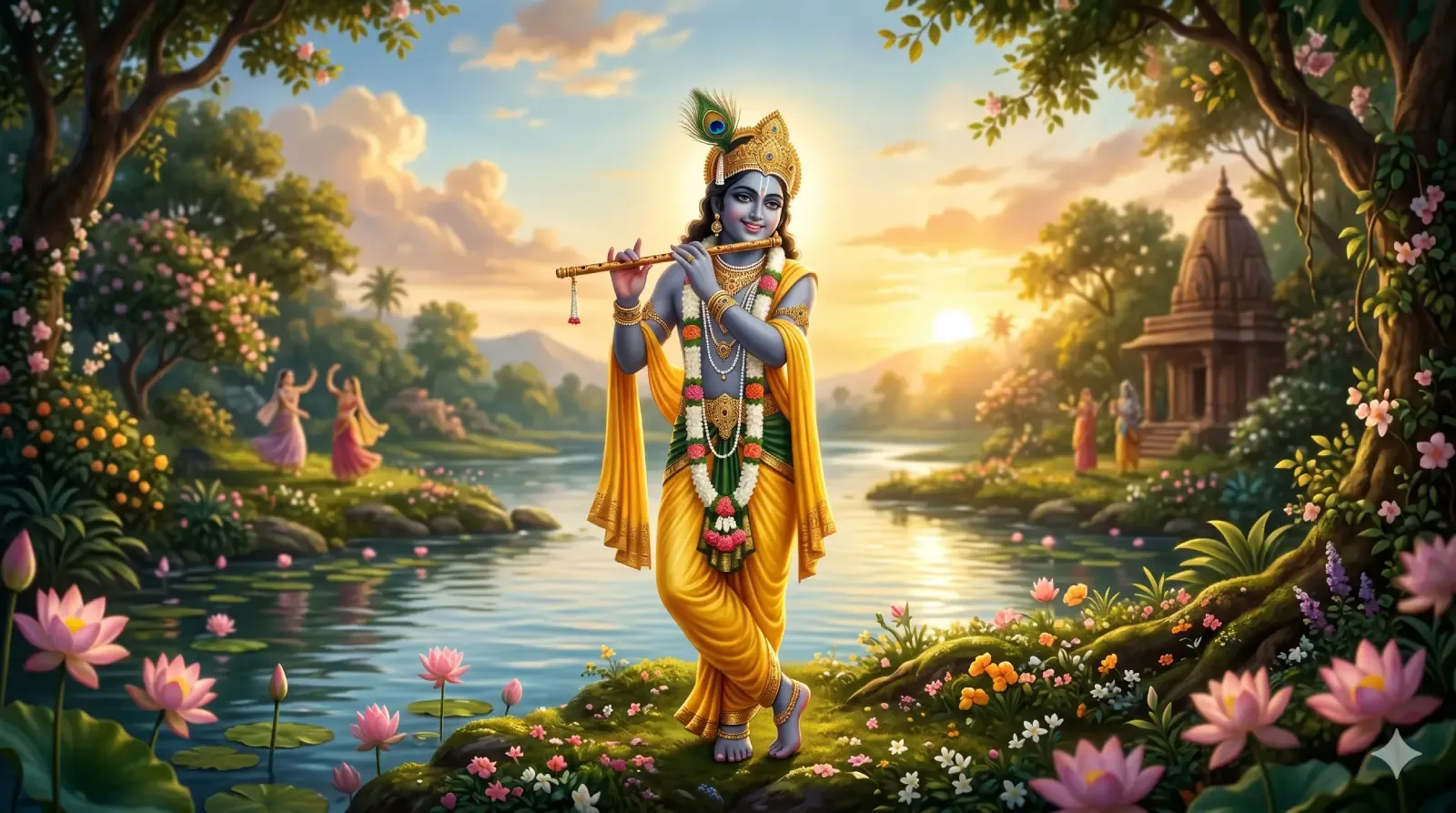
Krishna appears in every stage of life as a beloved figure: the miraculous infant who lifted Govardhan Hill and killed the serpent Kaliya; the mischievous butter-thief (Makhan Chor) of Vrindavan; the divine flute player (Murali Manohar) who enchanted the gopis; the philosopher-king who delivered the 700-verse Bhagavad Gita to Arjuna on the battlefield of Kurukshetra; and finally the wise statesman-king of Dwarka. The Bhagavata Purana (Srimad Bhagavatam) devotes its entire tenth canto to the life of Krishna.
In the Vedic astrological tradition, Krishna is associated with the Moon (Chandra) — serene, beautiful, and reflective — and with Venus (Shukra) through his association with arts, music, and love. Karka (Cancer — Moon-ruled) and Meena (Pisces — associated with spiritual liberation, Jupiter-ruled) Rashi natives find particular affinity with Krishna's energy. The Krishna Ashtakam composed by Adi Shankaracharya ("Vasudeva Sutam Devam") is one of the finest Sanskrit hymns combining philosophical depth with devotional beauty.
Krishna & Vedic Astrology
Associated Planet
Moon
Auspicious Day
Wednesday · बुधवार
Main Festival
Janmashtami
Rashifal for Moon-Influenced Signs
Frequently Asked Questions about Krishna
What is Janmashtami and when does it fall?
Janmashtami celebrates the birth of Krishna, falling on the eighth lunar day (Ashtami) of the Krishna Paksha (dark fortnight) in the Shravana month (July–August). It is observed on a different Gregorian date each year because it follows the lunisolar Panchang calendar. Devotees fast the entire day, conduct midnight puja at the exact time of Krishna's birth (Rohini Nakshatra, midnight), perform jhula (cradle swinging) of Krishna's idol, and break their fast only after the worship. The Dahi Handi (breaking a pot of curd) is a major community event on the following day.
What is the Bhagavad Gita and when did Krishna deliver it?
The Bhagavad Gita ("Song of God") is a 700-verse Sanskrit dialogue between Prince Arjuna and his charioteer Krishna on the battlefield of Kurukshetra, just before the Mahabharata war. It forms chapters 23–40 of the Bhishma Parva of the Mahabharata. Krishna reveals his universal form (Vishwarupa) to Arjuna and teaches the philosophy of karma (action without attachment), jnana (self-knowledge), and bhakti (devotion) as paths to liberation. It is the most widely read Hindu scripture in the modern world and has been translated into over 100 languages.
What is the Krishna Ashtakam by Adi Shankaracharya?
The Krishna Ashtakam ("Vasudeva Sutam Devam") is an eight-verse Sanskrit hymn composed by Adi Shankaracharya (8th century CE). Each verse describes Krishna in a different form — as the infant Vasudeva, the cowherd of Vrindavan, the flute player, the lover of Radha, and the supreme Brahman. The phalashruti verse states that reciting these eight verses daily grants freedom from all sins and liberation from the cycle of rebirth. It is among Shankaracharya's most melodious compositions, set to the Bhairavi raga.
What is the significance of the flute (Bansuri) in Krishna's iconography?
The flute (Murali or Bansuri) is Krishna's most recognisable attribute and carries deep philosophical significance. The flute is hollow — representing the ego that must become empty for the divine breath to flow through it and produce music. Krishna's flute playing in Vrindavan is described in the Bhagavata Purana as so enchanting that it stopped the flow of rivers, made cows forget to graze, and drew the gopis (cowherd women) irresistibly toward the divine. In Vedanta, the flute represents the call of the Supreme Consciousness to the individual soul.
Which Rashi natives benefit most from Krishna worship?
Krishna is associated with the Moon and Venus in Vedic astrology — qualities of beauty, art, serenity, and devotion. Karka (Cancer — Moon-ruled) and Meena (Pisces — associated with spiritual liberation) Rashi natives find the greatest affinity with Krishna's energy. Those in Moon Mahadasha, those with a weak or afflicted Moon, artists, musicians, and those seeking peace of mind and emotional healing are advised to worship Krishna on Wednesdays (Budhwar) and on Janmashtami with fasting and midnight puja.