लक्ष्मी
Lakshmi
Devotional Texts & Prayers
Lakshmi (Lakṣmī) — consort of Lord Vishnu, the divine mother of abundance, beauty, and good fortune — is one of the most universally worshipped goddesses in Hinduism. She is the bestower of wealth in all its eight forms (Ashta-Lakshmi): material prosperity (Dhana), grain (Dhanya), courage (Veera), victory (Vijaya), progeny (Santana), longevity (Aishvarya), knowledge (Vidya), and liberation itself (Moksha). Worship of Lakshmi on Fridays (Shukravar), during the month of Kartika culminating in Diwali, and on Lakshmi Panchami is the central devotional practice for invoking prosperity and removing financial hardship.
Lakshmi Devotional Texts
About Lakshmi
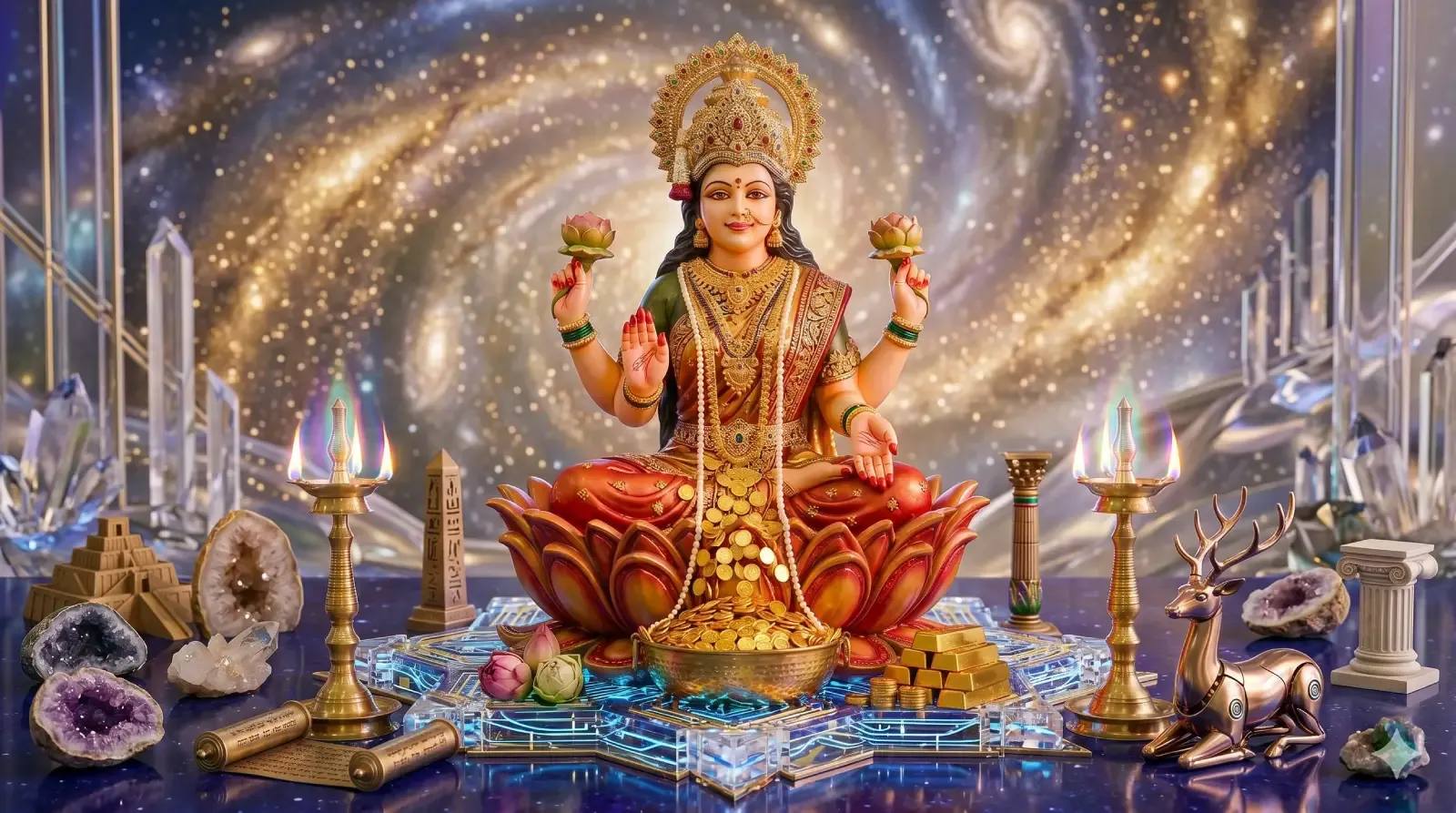
Lakshmi is depicted as a beautiful four-armed goddess seated or standing on a fully blossomed lotus, dressed in red and gold silk, with two of her hands holding lotuses and the other two in the gestures of giving (varada-mudra) and assurance (abhaya-mudra). Gold coins flow from her open palm. White elephants (representing royal authority and rain) flank her on either side. She is worshipped in eight forms collectively known as Ashta-Lakshmi — Adi-Lakshmi (primordial), Dhana-Lakshmi (wealth), Dhanya-Lakshmi (grain), Gaja-Lakshmi (royal power), Santana-Lakshmi (progeny), Veera-Lakshmi (courage), Vijaya-Lakshmi (victory), and Vidya-Lakshmi (knowledge).
In Vedic astrology, Lakshmi is associated with Venus (Shukra) — the planet of wealth, beauty, luxury, relationships, and material refinement. Vrishabha (Taurus) and Tula (Libra) Rashi natives — both Venus-ruled — benefit most from regular Lakshmi worship. Those in Venus Mahadasha or Antardasha, those experiencing financial hardship, those seeking marriage, and those whose Venus is afflicted in the natal chart are advised to recite the Lakshmi Chalisa, Sri Suktam, or Lakshmi Ashtakam on Fridays and during the Kartika month. Diwali night — the new moon (Amavasya) of Kartika — is the supreme night of the year for Lakshmi Puja, when she is said to visit the homes of those who keep their houses clean, brightly lit, and welcoming.
Lakshmi & Vedic Astrology
Associated Planet
Venus
Auspicious Day
Friday · शुक्रवार
Main Festival
Diwali
Rashifal for Venus-Influenced Signs
Frequently Asked Questions about Lakshmi
Why is Friday considered Lakshmi's day?
Friday (Shukravar) is the day of Venus (Shukra), and Lakshmi is the presiding deity of Venus in Vedic astrology — both representing wealth, beauty, harmony, and material wellbeing. The traditional Friday observance includes bathing in the morning, wearing red or pink clothes, lighting a ghee or sesame-oil lamp before a Lakshmi idol, offering fresh white flowers (especially lotus), kheer or sweet rice, and reciting the Lakshmi Chalisa or Sri Suktam. Friday fasting (Shukravar Vrat) for 16 consecutive weeks is a classical vow for those seeking marriage or financial improvement.
What is Sri Suktam and why is it considered the supreme Lakshmi hymn?
Sri Suktam is a 15-verse hymn from the Khila portion of the Rigveda — one of the very few Vedic hymns directly addressed to Goddess Lakshmi (referred to as Sri). It begins with "Hiranya-varnam harinim suvarna-rajata-srajam" — invoking Lakshmi of golden complexion, like a fawn, garlanded in gold and silver. Because it carries the unmatched authority of the Veda itself, Sri Suktam is recited at the start and conclusion of every major Lakshmi Puja, on Diwali night, on Lakshmi Panchami, on Akshaya Tritiya, and on Fridays. The recommended count is 11 or 108 recitations during a sadhana.
Which Rashi natives benefit most from Lakshmi worship?
Vrishabha (Taurus) and Tula (Libra) Rashi natives — both ruled by Venus (Shukra) — benefit most from regular Lakshmi worship. Those in Venus Mahadasha or Antardasha (which can last up to 20 years), those experiencing financial blocks, those seeking marriage or harmony in relationships, those in artistic or luxury professions, and those whose Venus is afflicted or weak in the natal chart are advised to recite the Lakshmi Chalisa, Sri Suktam, or Lakshmi Ashtakam on Fridays and during the holy month of Kartika. Friday morning is also considered the best time for any business launch, marriage, or financial decision.
How should Lakshmi Puja be performed on Diwali?
Diwali Lakshmi Puja is performed on the Amavasya (new moon) night of Kartika month. The traditional method includes: (1) cleaning the entire house thoroughly in advance; (2) drawing rangoli at the entrance and lighting clay lamps throughout the home; (3) setting up a Lakshmi-Ganesh-Kuber idol or image on a red cloth with rice grains beneath; (4) invoking the deities through the Pranapratishtha mantra; (5) offering panchamrita, water, kumkum, turmeric, fresh flowers (lotus and marigold), incense, lamp, and naivedya (kheer, ladoo, fruits); (6) reciting the Sri Suktam, Lakshmi Chalisa, and Lakshmi Ashtottara (108 names); (7) performing Aarti with five wicks; and (8) keeping the lamps lit throughout the night to welcome Lakshmi.
What is the significance of the Ashta-Lakshmi (eight forms of Lakshmi)?
Ashta-Lakshmi refers to the eight manifestations through which Lakshmi grants every form of prosperity: (1) Adi-Lakshmi — the primordial Mother Goddess; (2) Dhana-Lakshmi — wealth in currency, gold, jewels; (3) Dhanya-Lakshmi — abundance of grain and food; (4) Gaja-Lakshmi — royal authority and political power, represented with elephants; (5) Santana-Lakshmi — blessing of children and progeny; (6) Veera-Lakshmi (also Dhairya-Lakshmi) — courage and patience in adversity; (7) Vijaya-Lakshmi — victory in undertakings, legal matters, and competitions; and (8) Vidya-Lakshmi — knowledge, wisdom, and the highest education. Devotees worship the specific form most needed in their current life situation.