गणेश
Ganesh
Devotional Texts & Prayers
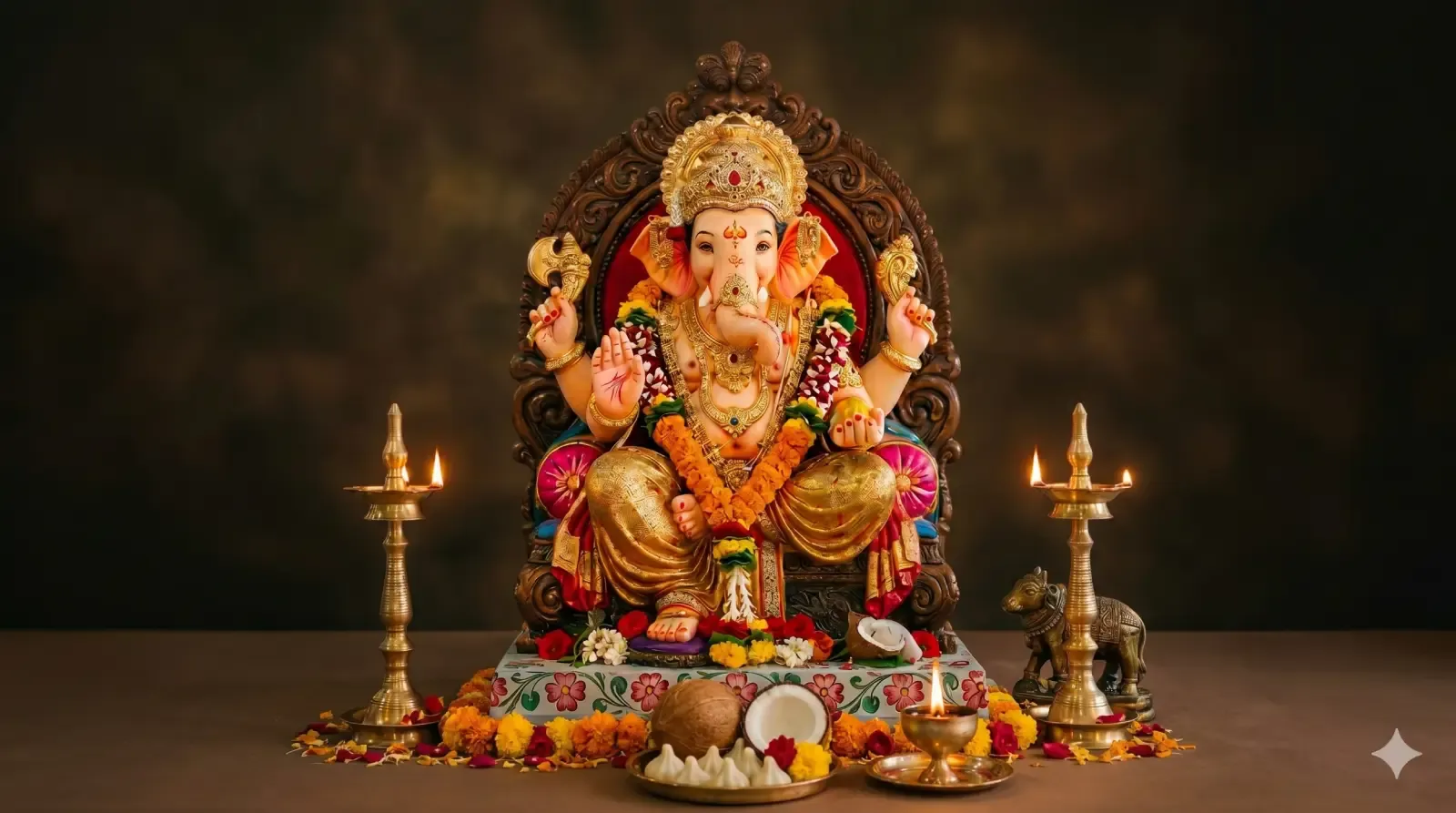
Ganesh (Gaṇeśa) — the elephant-headed son of Shiva and Parvati — is the remover of obstacles (Vighnaharta), the lord of new beginnings, and the patron of wisdom, arts, and prosperity. No Hindu ritual begins without first invoking Ganesh. In Vedic astrology, Ganesh is associated with Mercury (Budh) — the planet of intelligence and communication — and is worshipped especially by Mithuna (Gemini) and Kanya (Virgo) Rashi natives seeking clarity and success.
Ganesh Devotional Texts
About Ganesh
Ganesh holds the unique position of being the first deity invoked in any Hindu puja, yagna, wedding, business inauguration, or auspicious activity. The Ganesh Chaturthi festival — the 10-day celebration of Ganesh's birth — is one of the largest Hindu festivals in Maharashtra and across South India. The clay idol of Ganesh immersed in water at the end of the festival symbolises the cycle of creation and dissolution. Ganesh is depicted with an elephant head, a broken tusk, four arms, and is accompanied by his vehicle, the mouse (Mushika) — which represents the ego that must be tamed.
In Vedic astrological tradition, Ganesh is the deity associated with Mercury (Budh), the planet governing intelligence, speech, writing, commerce, and analytical thinking. Worship of Ganesh on Wednesdays is believed to enhance Mercury's positive effects — improving memory, communication skills, business acumen, and analytical reasoning. Mithuna (Gemini) and Kanya (Virgo) natives — both Mercury-ruled — particularly benefit. The Ganesh Chaturthi day itself falls on the fourth lunar day (Chaturthi) of the Shukla Paksha in Bhadrapada month.
Ganesh & Vedic Astrology
Associated Planet
Mercury
Auspicious Day
Wednesday · बुधवार
Main Festival
Ganesh Chaturthi
Rashifal for Mercury-Influenced Signs
Frequently Asked Questions about Ganesh
Why is Ganesh worshipped first in every Hindu ritual?
Ganesh is Vighnaharta — the remover of obstacles — and Prathamesh — the lord who must be invoked first. According to the Skanda Purana, Lord Shiva declared that Ganesh must be worshipped at the beginning of any ritual to ensure its successful completion without impediments. Even other major deities like Vishnu and Shiva are said to worship Ganesh before beginning important divine activities. This primacy of Ganesh is universally observed across all Hindu traditions and sects.
What is Ganesh Chaturthi and when does it fall?
Ganesh Chaturthi (also called Vinayaka Chaturthi) is the 10-day festival celebrating Ganesh's birthday, falling on the fourth lunar day (Chaturthi) of the Shukla Paksha (bright fortnight) in the Bhadrapada month (August–September). The festival begins with the installation of clay Ganesh idols in homes and public pandals. On the tenth day (Anant Chaturdashi), the idols are immersed in water (Visarjan) to the chant of "Ganpati Bappa Morya." The festival was popularised as a public event by Bal Gangadhar Tilak in 1893.
Why does Ganesh have a broken tusk?
The broken tusk (Ekadanta — one-tusked) has multiple mythological explanations. The most famous: Ganesh used his own tusk as a stylus to transcribe the Mahabharata dictated by sage Vyasa when his pen broke, refusing to let the composition pause. Another version: when Parashurama came to visit Shiva and found Ganesh guarding the entrance, Ganesh blocked his entry. Parashurama hurled his divine axe, and Ganesh — recognising it as a gift from his father Shiva — respectfully received it with his tusk, which broke upon impact.
Which Rashi natives benefit most from Ganesh worship?
Ganesh is associated with Mercury (Budh) in Vedic astrology. Mithuna (Gemini) and Kanya (Virgo) Rashi natives — both Mercury-ruled — benefit most from regular Ganesh worship. Those in Mercury Mahadasha or Antardasha, students, writers, traders, and professionals in communication fields are advised to worship Ganesh on Wednesdays (Budhwar) and on Ganesh Chaturthi to enhance Mercury's positive qualities of intelligence, communication, and commercial skill.
What are the different names of Ganesh and their meaning?
Ganesh has 108 names (Ashtottara Shatanamavali) each reflecting a different attribute. Key names include: Ganapati (lord of the ganas/divine beings), Vighnaharta (remover of obstacles), Vighnakarta (creator of obstacles for the unrighteous), Ekadanta (one-tusked), Lambodara (large-bellied — containing the entire universe), Vakratunda (curved trunk), Dhumravarna (smoke-coloured), and Siddhi-Vinayaka (granter of success and accomplishment). The Ganesh Ashtottara Shatanamavali recitation on Chaturthi is said to bestow all 108 blessings.